
Searching Montgomery County Civil Dockets
Indiana MyCase is the free way to pull nonconfidential Montgomery County civil dockets from Odyssey. Enter the full case number if you have it. Name search works too. Use a last name or business name. First and middle names are optional. Filters for court, status, and filing date help you tell similar cases apart. MyCase caps its results, so narrow the date span and pick the correct Montgomery court before you run it.
Copy down the whole case number, the court label, the filing date, the civil type, and the caption. Remember that the CCS is a public chronology, not a certified judgment. If an item has no online link, contact the Montgomery County Clerk. The office sits at 100 East Main Street, Room 102, Crawfordsville. You can also call 765-364-6430. Ask whether the filing is public online, counter-only, restricted, or simply not digitized.
- Open MyCase and choose Case or Name mode, then narrow the court to Montgomery Circuit, Superior 1, or Superior 2.
- Enter the complete Odyssey number, or use party and filing-date fields to narrow a name search.
- Match the court, case type, filing date, and caption before opening the public CCS.
- Read service, appearances, filings, motions, hearings, orders, judgment, and appeal entries in date order.
- Request the exact judgment, order, or pleading from the Clerk when an official or certified copy is needed.
Three Montgomery Civil Docket Courts
Montgomery County has three civil courts. Under the local civil rules, they are Circuit Court, Superior Court 1, and Superior Court 2. The same rules steer certain case types to one specific court. A judge can also transfer or reassign a case by order in the Record of Judgment and Orders. An older note may list the filing court. The current MyCase result shows the court that received the case.
| Court | Local Civil Assignment | Search Point |
|---|---|---|
| Circuit Court | All civil types and non-JT juvenile matters | Check 54C01 and the CCS for later transfer orders. |
| Superior Court 1 | Any civil case, Title IV-D domestic relations, and adoptions | Check 54D01 and access limits tied to case type. |
| Superior Court 2 | Any civil case, small-claim-sized contract and tort, possession, probate, and JT | Check 54D02 and distinguish civil, small-claims, and probate codes. |
Trust the current court label on the docket, not a guess drawn from the subject of the dispute. Transfer history stays inside the same civil docket.
Inside a Montgomery County Civil Docket
A Montgomery civil CCS logs events, not merely an outcome. It can name the assigned judge. Parties and counsel appear too. The rest can include the relief sought when public, service or summons activity, appearances, motions, hearings, rulings, judgment, and appeal. Financial fields may display filing charges or a public judgment balance. Treat none of that as a certified payoff. The Clerk holds the official record.
| Case Number | County, court, date, civil type, and sequence, such as synthetic 54D01-2608-PL-000123. |
|---|---|
| Parties | Public party roles, counsel, appearances, and representation changes, without protected addresses or identifiers. |
| Service | Summons issuance, returns, service status, appearances, and answer dates. |
| Motions | Title, filing date, response or deadline, setting, and later ruling. |
| Outcome | Settlement, dismissal, default, judgment, decree, disposition date, and appeal when public. |
| Access Class | Linked public document, in-person-only filing, restricted attachment, redaction, or sealed material. |
Montgomery Civil Docket Codes
Administrative Rule 8 defines the Odyssey code groups used in Montgomery County. The first five characters mark the county and court. Later groups carry the filing year and month, the case type, and the sequence. Common civil labels include CC for contract, CT for tort, DC for dissolution, DN for paternity, EV for eviction, MF for mortgage foreclosure, PC for probate, PL for plenary, PO for protective order, and SC for small claims.
- Filed
- A submission entered into the case. It is not a ruling.
- Ordered
- A judge entered an order. Read the order for its actual terms.
- Interlocutory
- An order made before the final judgment that does not end the whole case.
- Disposed
- The claim or case reached a recorded disposition, though later review or compliance events may remain.
Check any code against the live caption and CCS. Codes sort records, but a code never proves what relief was granted.
Civil Case Types on the Docket
Montgomery County civil dockets cover many case types. Public access differs across them. A contract dispute may show most of its CCS online. An adoption, juvenile, family, mental-health, or protective-order file often gets narrower access. Identify the type first, then judge whether a filing is truly absent.
- Contract, debt, tort, plenary, and other general civil claims.
- Small claims, eviction, possession, and mortgage foreclosure matters.
- Dissolution, paternity, custody, support, guardianship, and Title IV-D cases.
- Probate, estate, trust, adoption, juvenile, and mental-health proceedings.
- Protective orders, expungement petitions, appeals, and related civil categories.
The Montgomery County court forms collection offers civil, small-claims, family, eviction, foreclosure, appeal, continuance, virtual-appearance, and fee-waiver materials.
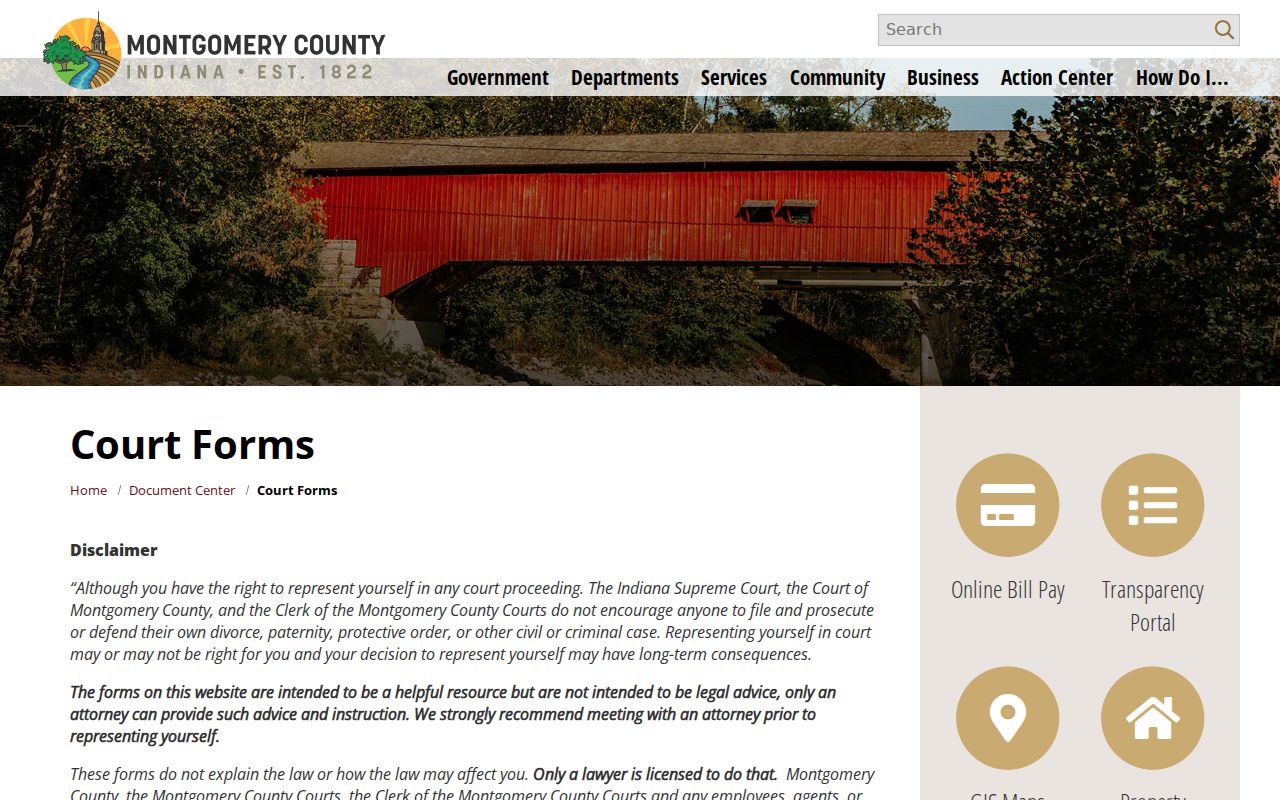
A form category alone proves nothing about a specific case. The docket and its entered orders control.
Montgomery Civil Forms and Dockets
A blank form is just a filing aid. It does not prove a pleading was filed, served, or granted. The civil CCS should show a filed title and date. Later entries may show service, an answer, a hearing, and an order. Each one is logged as its own event. Motion, notice, order, judgment, and decree are separate things. Don't merge them into one summary.
When a pleading has no online link, quote its CCS title and entry date when you ask the Clerk for access, and say whether you need a plain copy or a certified copy. Montgomery County offers no unified online request form. Confirm identification, fee, payment, mail, and turnaround requirements before you send anything. A downloaded MyCase order can help with case research. Only the Clerk can supply a certified Montgomery County civil court record.
Civil Docket Settings and Hearings
A civil setting should list the case, date, time, court, location, and hearing type. The event might be a motion, status conference, pretrial, or mediation. It could also be a trial, review, probate matter, or small-claims event. A setting means scheduled, nothing more. It does not prove the hearing happened or that the judge ruled.
Read forward in the CCS for a continuance, reset, or cancellation. Look for an order entered after the date too. Montgomery local rules require a continuance request to be written and timely. A request alone never moves a hearing. The order controls. The full confirmation chain sits in the Montgomery County court dates resource. For a current date, compare MyCase against the assigned court. The online calendars have no published Montgomery refresh interval.
Montgomery Civil Docket Transfers
A transfer never wipes out what came before. Under Montgomery local rules, a judge can reassign a civil case through an order entered in the Record of Judgment and Orders. The receiving court then has to take it. So the CCS may list early filings under the original court, then a transfer entry. Everything that follows lands under the new assignment.
If your saved case number seems to point to a different Montgomery court, pause. Read the transfer entry first instead of launching a fresh docket search. The live Odyssey court label plus that order will explain the switch. One more wrinkle: related dissolution and protective-order matters can be cross-referenced or scheduled together. They still stay separate records.
Montgomery Civil Docket Fees
Montgomery County does publish a local court-fee page, but it shows costs effective July 2013. Treat it with care. What you actually pay today can hinge on case type, service, copies, certification, or postage. Some other statutory charge may apply as well. The Indiana trial court fee manual is the better current reference. The Clerk can confirm the exact figure.
Do not rely on a stale table. Ask the Clerk to confirm the current filing, copy, service, or certification charge for the exact civil request.
The state publication is the right place to begin a current fee check.
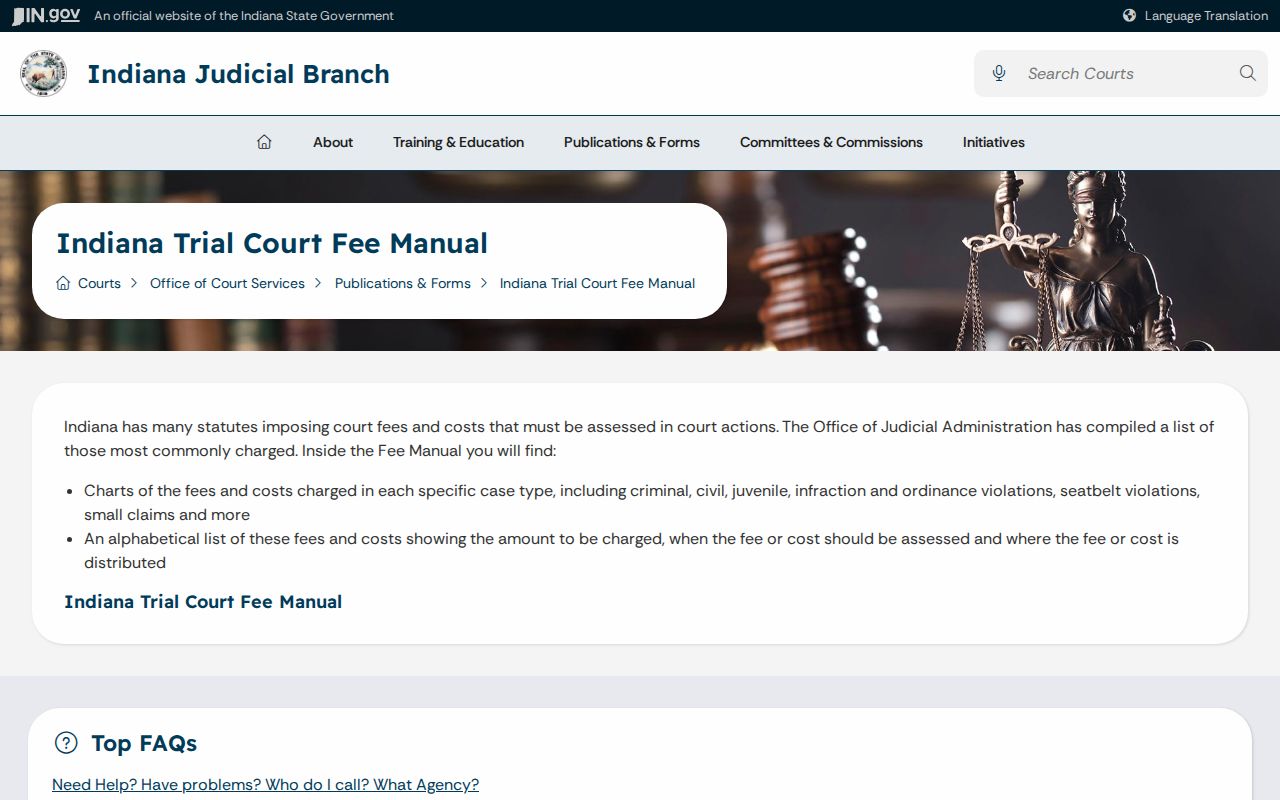
One caution on amounts. A number on the public docket is not always a certified balance, so request the proper record when the exact figure matters.
Civil Docket Access Rules
Indiana Access to Court Records Rule 4 draws the public baseline. Rule 5 then steps in to exclude or limit confidential, sealed, juvenile, medical, treatment, protected-identifier, and other listed material. Civil dockets deserve extra care here. Family, adoption, protective-order, mental-health, and child-related files can mix public CCS events with documents the public cannot see.
Key access rules:
Rule 4 makes court records accessible unless another rule excludes them.
Rule 5 identifies confidential and restricted court-record categories.
Rule 9 supplies the process for a lawful request seeking access to excluded records.
The official rule on requests explains the limit. A general public-records letter cannot override a sealing order or a Rule 5 exclusion.
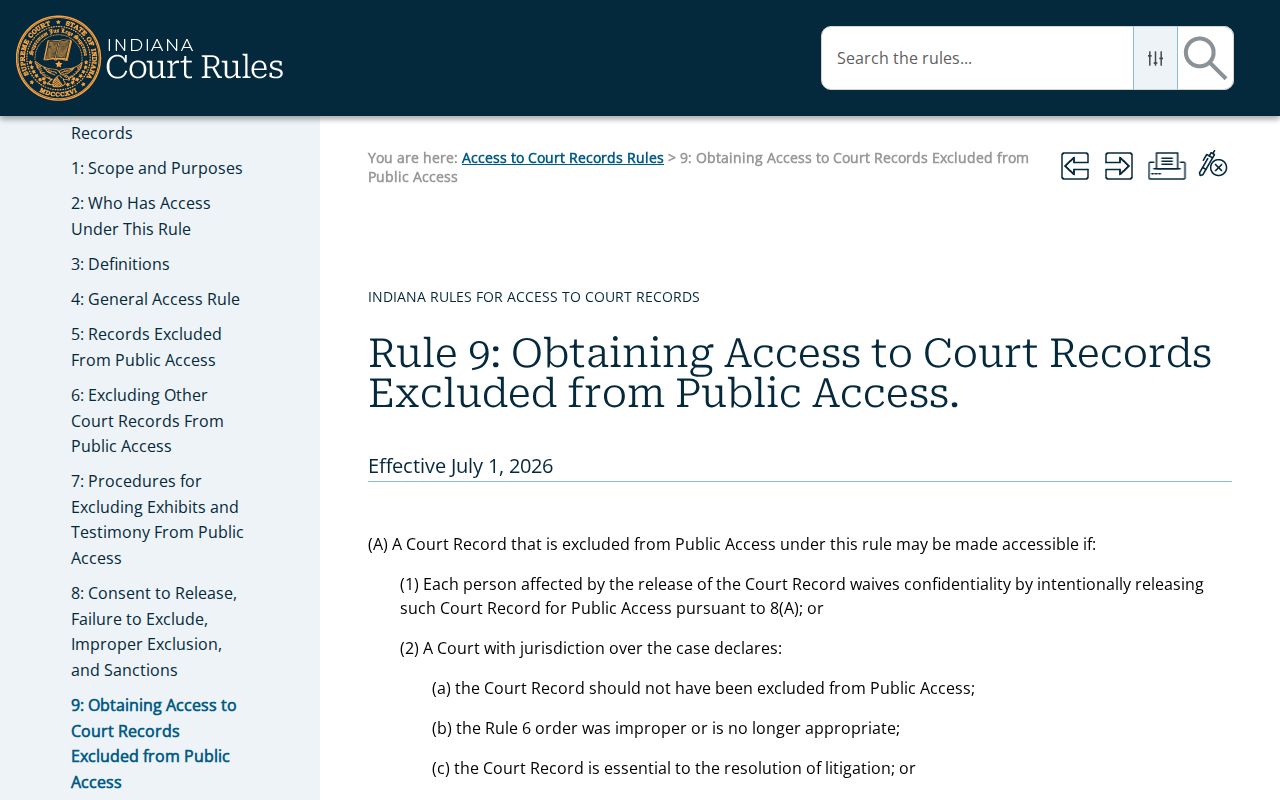
When a civil filing is restricted, work through the court process. A short public event label tells you nothing about what the filing actually contains.