
Getting Montgomery County Court Records
Start with the Indiana MyCase public search. You can pull up a case by number, citation, party, or attorney. Write down the complete Odyssey number and the court. MyCase displays the public Chronological Case Summary plus selected documents. That makes it a good discovery channel. It is not a certified version of the Clerk's file.
For the official Montgomery County court record, contact Sondra Dittmer Sixberry. She is the Clerk of the Circuit Court. Her office serves Circuit Court, Superior Court 1, and Superior Court 2. Visit Room 102 at 100 E Main Street, Crawfordsville, during the posted weekday hours of 8:00 a.m. to 4:30 p.m., excluding legal holidays. You can also call 765-364-6430. The county lists fax 765-364-6355. But it says nothing about fax, email, mail, or a drop box accepting copy requests. Ask which submission method works before you send anything.
- Locate the case and save its complete number.
- Identify the exact CCS, order, judgment, transcript, exhibit, or file item.
- Ask whether the item is online, in-person-only, archived, or restricted.
- State whether a plain copy, inspection, or certified copy is needed.
- Confirm the fee, payment method, delivery method, and processing time.
Montgomery Clerk Room 102
The Montgomery County Clerk page points to the first-floor court-record counter. That office handles filings, court costs, financial records, jury administration, and authorized court documents. Keep it separate from the judges, prosecutor, public defender, probation office, and each town clerk.
Clerk of the Circuit Court
Sondra Dittmer Sixberry
Room 102, 100 E Main Street
Crawfordsville, IN 47933
765-364-6430
Monday through Friday, 8:00 a.m. to 4:30 p.m., excluding legal holidays
Bring or quote the case number and document title. Leave out Social Security numbers, account numbers, medical facts, and other protected data unless the Clerk directs you to a secure channel. A county renovation moved the office to the first floor for better access. Confirm current entry and parking details before you travel.
Court Record Types
The CCS is just the event list, not the whole Montgomery County court record. A full case file may hold pleadings, affidavits, and returns of service. It may also hold motions, notices, orders, judgments, financial ledgers, exhibits, recordings, and transcripts. Who holds what varies. The Clerk generally keeps filed and financial records. A court reporter may control transcripts and exhibits. Probation and law enforcement hold their own material. That is not part of the public court file.
- CCS
- The Chronological Case Summary, which lists public case events in date order.
- Filed document
- A pleading, motion, notice, or other item accepted into the record.
- Order or judgment
- A court's written ruling, which may be requested by title and entry date.
- Certified copy
- A reproduction authenticated by the Clerk, not merely a downloaded PDF.
- Transcript
- A prepared record of proceedings, commonly requested through the assigned court or reporter.
Three Montgomery Record Layers
A docket, a filed document, and a certified copy answer different questions. The docket shows an event was entered. The filed document gives the text, if it is public. Certification verifies the Clerk's reproduction. Ask for "the record" without choosing. Your request can stall.
| Layer | What it supplies | Where to start |
|---|---|---|
| Public CCS | Dates and event titles | MyCase |
| Case-file document | The public filing or order itself | Online link or Clerk |
| Certified record | Clerk-authenticated copy | Clerk request |
The official MyCase help page explains why the public display may carry errors or incomplete financial data. Its manifest image appears here.
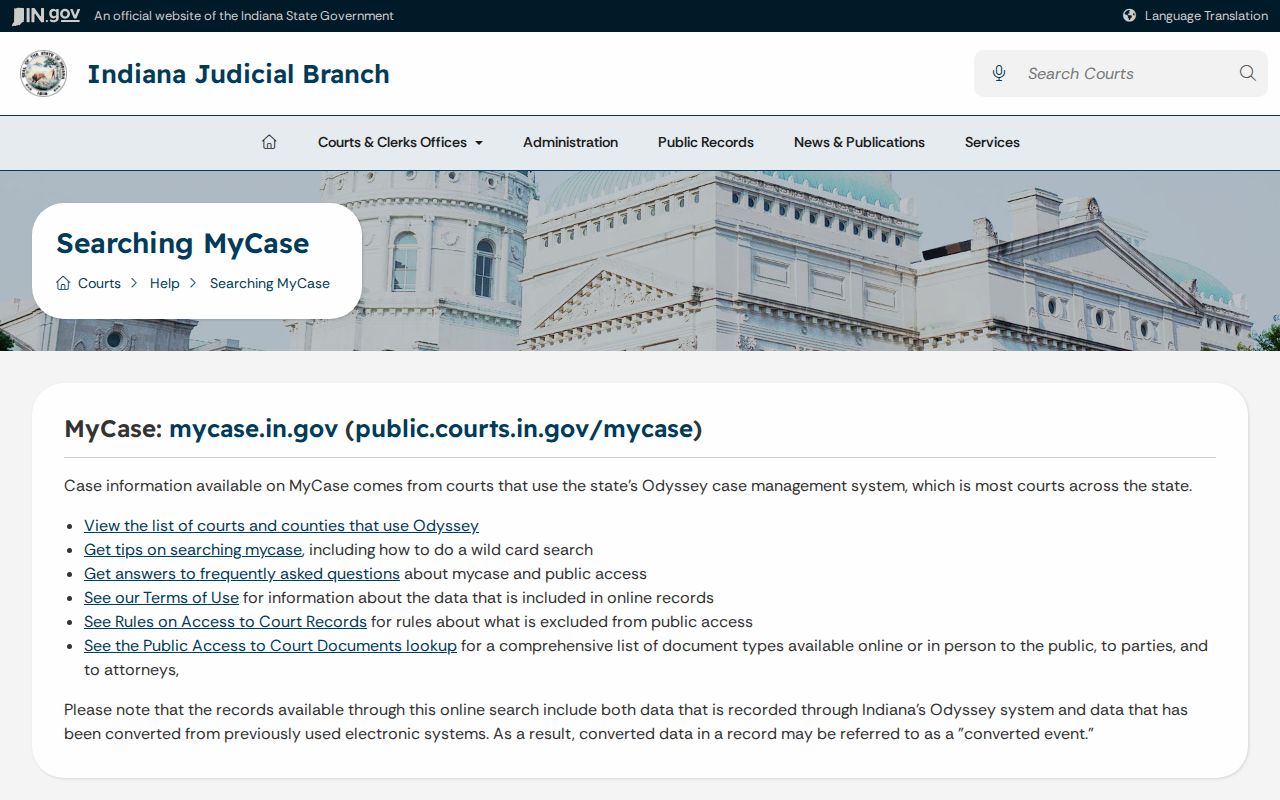
That help material drives home one point. Verify any Montgomery County court record with the originating court or Clerk.
Inside a Montgomery Court Record
What sits inside a file depends on case type and access status. A public civil file may show service, motions, hearings, rulings, and judgment. A criminal file may show charges, settings, plea or trial events, sentencing, and later review. Probate and family cases are stricter. Juvenile, adoption, protective-order, mental-health, and expungement records face stricter limits too.
| Header | Case number, court, case type, filed date, status, caption, and assigned judge. |
|---|---|
| CCS history | Filed items, settings, orders, transfers, and dispositions in date order. |
| Documents | Public pleadings and orders, with access varying by type. |
| Financial fields | Assessments and payments, which may not form a certified balance. |
| Access class | Public, online, in-person-only, redacted, sealed, or confidential. |
Start with the MyCase document access matrix, which lays out the statewide access rules. Those same rules govern Montgomery County court records.
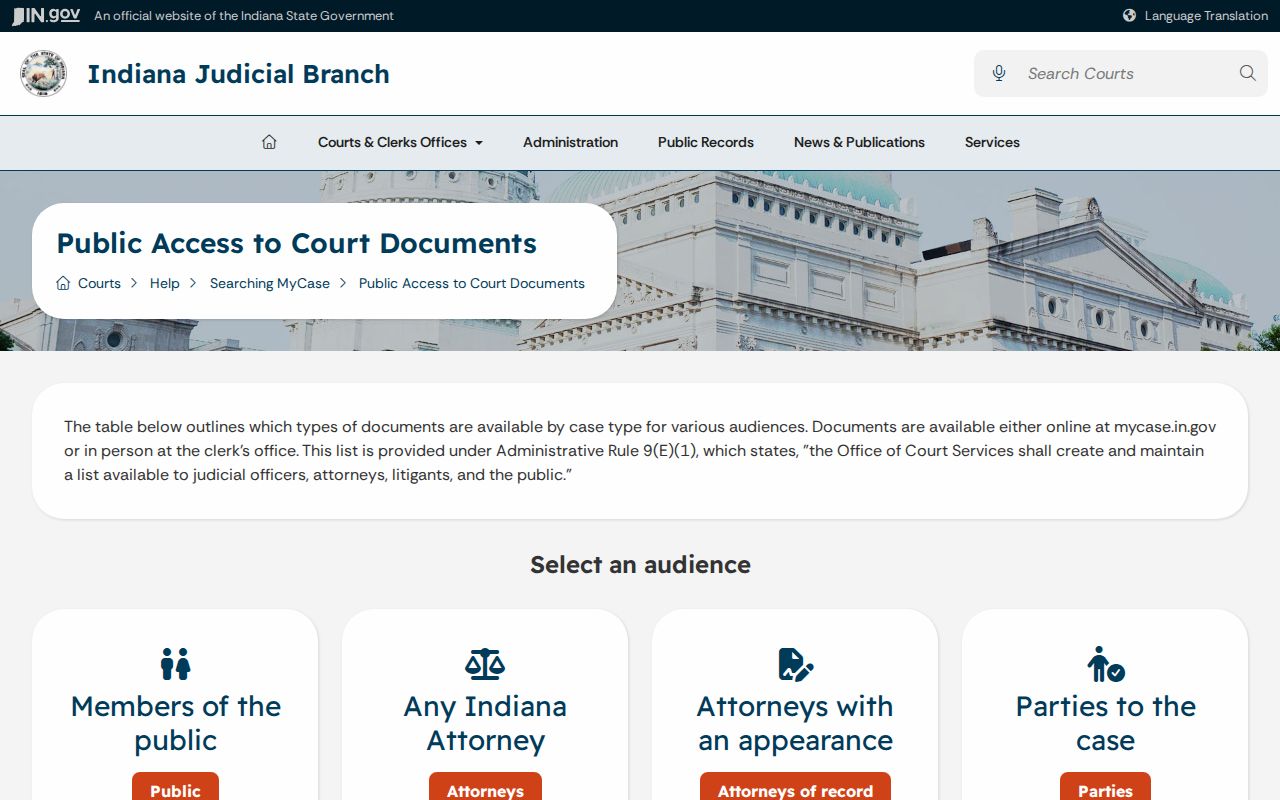
A missing link can mean restricted access or in-person availability. It does not prove the filing is absent.
Request a Certified Montgomery Judgment
The county's Court Forms page posts no unified online form for a certified CCS, judgment, or general case-file copy. Call the Clerk before sending a request. Give the county, court, complete number, caption if needed, exact document and entry date, certification type, and desired delivery method.
Be exact: Ask for a “certified judgment entered on [date]” or a “certified CCS,” not merely “the whole case.”
Also ask what identification, payment, postage, and turnaround apply. Montgomery-specific details are not posted, and a missing charge list does not mean the copy is free.
Fees and Certified Copies
The county's posted fee table carries an effective date of July 2013. Treat it as history, not a current quote. The Indiana Trial Court Fee Manual is a stronger current reference, but the Clerk still has to price a specific Montgomery County court record request.
| Item | Published Montgomery amount |
|---|---|
| Plain copy per page | Not located; ask the Clerk |
| Certified copy | Not located; identify the exact item |
| Certification fee | Not located; verify current rule |
| Search or archive retrieval | Not located; ask before ordering |
| Electronic image | Doxpop may charge; Clerk terms differ |
The dated county filing-fee page is preserved in the manifest image below.
Filing costs and copy charges serve different purposes. Ask for each fee separately and confirm the total before you pay.
Montgomery Exhibit Retention Windows
Local rules generally place marked exhibits with the Court Reporter unless the court orders otherwise. Exhibits must be removed within 60 days after the case is decided. The window is 30 days after an appeal resolves. A receipt is filed either way. Someone asking years later should not assume an exhibit still sits behind the Clerk's counter. The CCS says it was admitted, but that alone proves little. For a transcript, ask the assigned court or reporter about custody, status, format, estimate, fee, and delivery. For an exhibit, quote the CCS entry. Then ask whether the item remains with the reporter, was returned, or falls under another order. The county posts no schedule covering transcript, audio, exhibit, or certified-CCS fees.
Note: The event history can document admission of an exhibit even when the physical item is no longer held at the courthouse.
Sealed Records and Public Access
Access to Court Records Rule 4 draws the baseline for what the public may see. Rule 5 then carves out the exceptions, covering confidential and protected material such as many juvenile, adoption, medical, treatment, sealed, identifying, and sensitive family records. Indiana's Access to Public Records Act cannot override these court rules.
A requester seeking excluded material must follow Access Rule 9. A verified request, court order, or hearing may be required, and the rule supplies a response framework.
Request inspection only of what the law makes public. A blank docket search proves nothing, so do not guess at facts or copy redacted material. The Clerk can tell you a record's access class, though the office cannot offer legal advice.
Federal Records Use a Separate Clerk
State cases in Montgomery County live in MyCase and with the county Clerk. Federal cases are different. They sit with the Southern District of Indiana, Indianapolis Division. You reach them through PACER or CM/ECF. The district's federal access page explains how that federal system works.
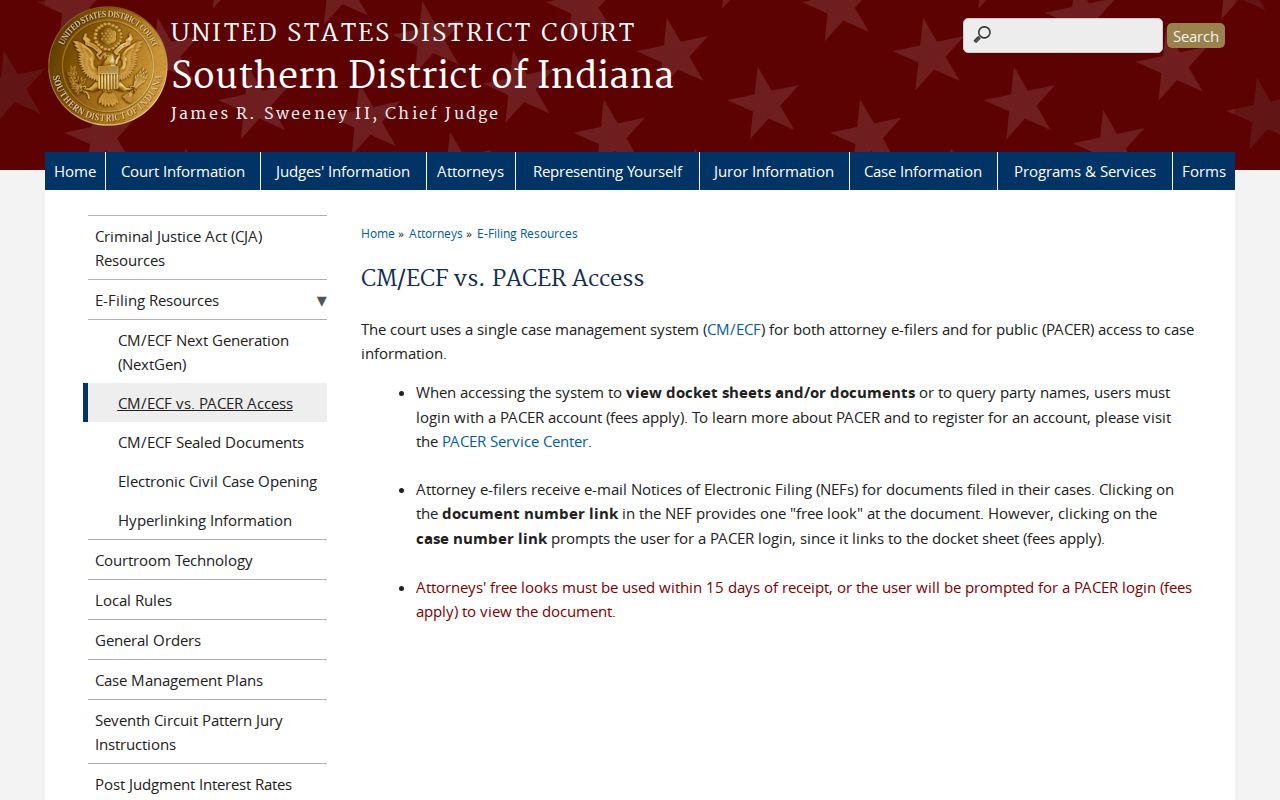
That split makes custody plain. A federal record request belongs at the federal court, not Room 102. Before ordering, find the state number through the Montgomery County case lookup.